When considering glass railings for your project, it’s essential to understand the various aspects that come into play. From determining your budget to selecting the right system and ensuring proper maintenance, this article provides valuable tips to help you make informed decisions and achieve the desired results within your budgetary constraints.
Determining Your Budget For Glass Railings
Setting a budget for your glass railing project involves considering a few key factors:
- Firstly, the size of the area that needs to be covered by the railing will impact the overall cost.
- Secondly, the complexity of the installation, such as any additional customization or structural adjustments, can increase the price.
- Finally, the quality and type of glass, as well as the choice of railing system, will also affect the budget. It is important to take these factors into account and establish a realistic budget that aligns with your desired outcome.
Choosing The Right Glass Railing System
Choosing the right glass railing system involves considering factors such as transparency, maintenance, and safety features. Glass railings come in various styles and designs, and it’s important to prioritize both functionality and aesthetics. Consider the existing decor and architecture of your space when exploring different designs.
Cost-saving Tips For Glass Railing Installation
To save money on glass railing installation, opt for DIY or hire professionals. Choose affordable materials and components without compromising on quality or aesthetics. Negotiate for better pricing by obtaining multiple quotes and bundling multiple projects or services together. Find the right balance between quality and affordability. Have fun with the process and keep your eyes on the view ahead.
Maintenance And Cleaning Tips For Glass Railings
To clean glass railings, use a soft brush or microfiber cloth to remove loose dust or dirt. Mix mild dish soap and warm water to wipe down the glass panels. Rinse the glass thoroughly with clean water. Dry the glass with a clean, lint-free cloth or a squeegee. For longevity, consider applying protective coatings or sealants, such as anti-fingerprint coatings and UV protection sealants. Follow the manufacturer’s instructions before cleaning.
Design Ideas And Inspirations For Glass Railings
Modern And Minimalist Glass Railing Designs
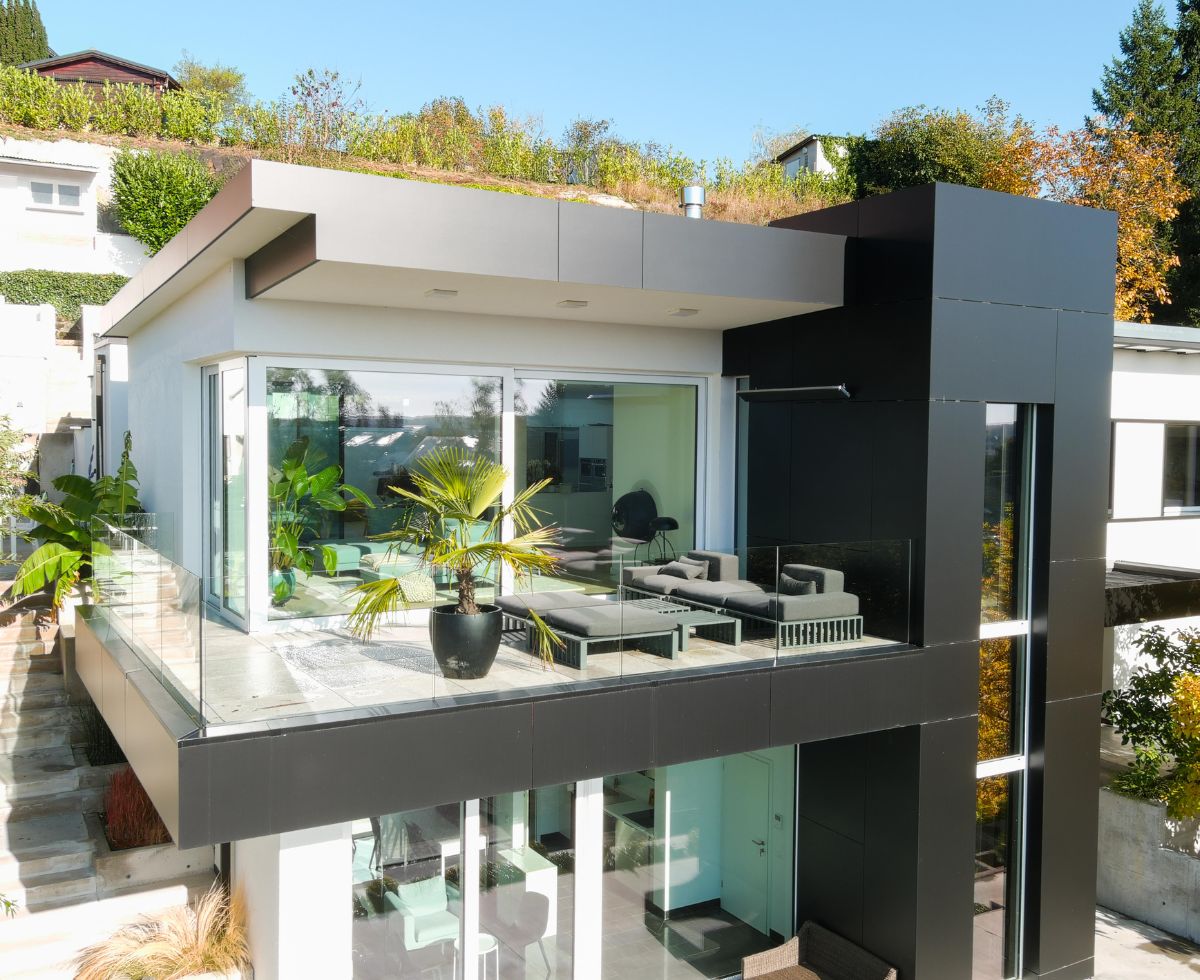
Glass railings are perfect for those who appreciate sleek, modern aesthetics. Embrace simplicity with clean lines and transparent glass panels. Minimalist designs create an open and spacious feel, allowing light to flow freely throughout your space.
Consider using frameless glass railings for a seamless look, or opt for stainless steel or aluminum hardware for a contemporary touch.
Customizing Glass Railings To Suit Your Style
Glass railings offer endless possibilities for customization to match your personal style. Here are a few ideas to get you inspired:
- Etched or frosted glass: Add privacy and uniqueness to your glass railings by incorporating etched or frosted patterns. This customization option allows you to create a one-of-a-kind design that complements your space.
- Colored glass: Experiment with colored glass panels to create a vibrant statement piece. Whether you prefer subtle pastels or bold hues, colored glass railings can add a pop of personality to any space.
- Decorative accents: Consider incorporating decorative elements like metal accents or intricate patterns within the glass panels. These details can elevate the overall design and make your glass railings stand out.
Remember, the key to customization is to let your imagination soar and create a look that reflects your unique personality and style!
About Cedric Marina In Vancouver & Surrey
At Cedric Marina, we pride ourselves on offering our customers the best quality glass railing systems at affordable prices. Our team of experts can answer all your questions about choosing and installing glass railing systems.
Whether you are looking for a glass railing system for your home or business, our team of experts is here to help you find the right solution for your requirements. Call us today to get a direct quote or fill out our contact form to know more.
]]>1. Purpose and Benefits of a T-Top
The T-Top is a game-changer in the boating world. It provides protection from the elements, enhances fishing experience, increases storage options, and ensures safety and stability. It offers a convenient solution for stowing away your gear and keeping everything within easy reach. It also provides stability and balance to your boat and serves as a secure handhold for passengers moving around the deck.
2. Factors to Consider When Choosing a Boat T-Top
When choosing a T-Top for your boat, consider factors such as boat size, material, construction, design, and style. Ensure compatibility with your boat’s size and structure. Material options include aluminum, stainless steel, fiberglass, canvas, and more. Choose materials based on durability, maintenance requirements, and aesthetic appeal. Design and style can add personality to your boat.
Consider functionality and customization options for additional storage compartments or built-in lighting. Find the perfect fit for your needs. T-Tops come in all shapes, sizes, and materials to suit every boater’s aesthetic preferences.
3. Different Types of T-Tops and their Features
-
Hard T-Tops
As the name suggests, hard T-Tops are made from sturdy materials like aluminum or fiberglass. They provide optimal protection from the elements, excellent stability, and often come with additional built-in features like overhead storage compartments and integrated lighting.
-
Folding T-Tops
For those who value convenience and versatility, folding T-Tops are the way to go. These nifty contraptions can be easily collapsed or folded down, allowing you to navigate low-clearance areas or store your boat in tight spaces. Perfect for boat owners with limited storage options!
-
Canvas T-Tops
Canvas T-Tops offer a lightweight and affordable alternative to their more rigid counterparts. Made from durable marine-grade fabric, they provide decent protection from the sun and rain while maintaining a flexible and collapsible design. Ideal for those who want a practical and budget-friendly T-Top option.
-
Tower T-Tops
If you’re after a T-Top that screams “serious business,” then look no further than tower T-Tops. These towering structures are typically used on larger boats and offer maximum shade coverage, ample storage options, and enhanced stability. Plus, they give your boat that extra touch of badassery that will make fellow boaters green with envy.
4. Installation and Maintenance Considerations for T-Tops
Installing a T-Top yourself is doable with DIY kits – just study instructions and gather tools. If you’re handy-averse, consider hiring a pro. Maintain your T-Top with mild soap and water, avoiding harsh cleaners. Inspect for wear like loose fittings or faded paint, and fix them promptly. Many manufacturers offer retrofitting options to ensure a perfect fit – just provide accurate boat measurements and details.
5. Cost Considerations and Budgeting for a T-Top
Price varies depending on size, material, and features. Budget wisely, including potential installation and unexpected costs. While price matters, remember a quality T-Top is an investment that boosts your boating experience and lasts for years. Consider durability and long-term value when making your choice.
About Cedric Marina
At Cedric Marina, our friendly and knowledgeable support team, based in Surrey, BC, is dedicated to assisting you every step of the way. Unlike commission-driven salespeople, our focus is on finding the perfect solution for your needs, ensuring your complete satisfaction.
If you have any questions for us, feel free to contact our customer support team via phone at (604) 373-4570, email, or by filling out our online contact form.
]]>
Boat Repair Issues:
1. Damaged Propellers
Propellers are vulnerable to damage due to debris, corrosion, or accidents. Minor dents or bends can be fixed using a propeller wrench or pliers. However, if the propeller is significantly damaged, it’s advisable to replace it to prevent further damage to the engine.
2. Engine Problems
Common engine problems include overheating, stalling, and poor performance. Regular maintenance, like changing the oil and filters, can help prevent many of these issues. If your engine continues to have problems after performing routine maintenance, it may be necessary to have it professionally inspected and repaired.
3. Leaks
Leaks can occur in the hull or in plumbing systems. For hull leaks, marine epoxy can be used to patch small areas. However, larger leaks often require professional repair. Plumbing leaks should be addressed by replacing faulty hoses or tightening loose connections.
4. Electrical Issues
Electrical issues can be due to faulty wiring, corroded connections, or drained batteries. Regularly inspect your boat’s electrical system for signs of wear and tear. Replace faulty wiring and clean corroded connections with a wire brush and corrosion inhibitor. Remember, working with electricity can be dangerous, so when in doubt, it’s best to seek professional help.
5. Damaged Hull
Hull damage can range from minor scratches to significant cracks. Minor scratches can be repaired using a gel coat repair kit, which helps maintain the aesthetic appeal of your boat. More serious cracks or holes, however, require professional repair.
6. Steering Problems
Steering issues can stem from several causes, including a damaged rudder, mechanical failure, or lack of hydraulic fluid. Small issues can be resolved by refilling hydraulic fluid or repairing minor mechanical problems. If the steering issue persists, consult a professional.
7. Boat Glass Hatch Issues
Over time, the glass on a boat hatch may become cloudy, scratched, or even cracked. Small scratches can be polished out using a glass repair kit. For larger cracks or if the glass becomes significantly cloudy, consider replacement to maintain visibility and safety.
8. Issues with Welded Parts
Welded parts such as railings, t-tops, or towers can become loose or corroded over time. Inspect these parts regularly for any signs of wear. Minor corrosion can be treated with rust inhibitors, while loose welds may require tightening or rewelding by a professional.
Take a Look at Our Marine Welding Service.
Boat maintenance and repairs are an integral part of boat ownership. It’s important to address issues as soon as they arise to prevent more significant, costly repairs down the line. At Cedric Marina, we are always ready to help with all your boat repair needs. We believe in offering professional services that keep your vessel in top condition so you can continue to enjoy your time on the water.
]]>Choosing the right boat canopy for your vessel is an investment in comfort, safety, and durability. It’s a decision that has the potential to enhance your boating experiences dramatically. Yet, it can feel overwhelming given the myriad of options available on the market. At Cedric Marina, we are passionate about assisting boat owners in making informed decisions that match their unique requirements. Here are some key factors to consider when choosing your boat canopy.
Choose the Right Boat Canopy:
1. Material and Durability
The boat canopy’s material is the first crucial aspect. It should be able to withstand harsh marine conditions. Popular materials include vinyl, acrylic, and polyester, each having its distinct advantages.
Vinyl canopies are waterproof and UV resistant, making them a great choice for vessels in sunny, wet climates. Acrylic, on the other hand, is known for its breathability and resistance to UV rays and mildew. Polyester is highly durable and fade-resistant, making it ideal for areas with high sun exposure.
The canvas and fabric used as a T-Top Cover will damage over time after 4-5 years our “Hard-Top Aluminum Canopy” is a solution to last a lifetime
- Aluminum Hardtop Canopy advantages are
- Very light to compare with Fibreglass
- Very cool on sunny days as aluminum reflects the heat
- Lightweight
2. Size and Shape
Size and shape are primarily determined by your boat’s design and your personal preferences. The canopy should provide ample shade without obstructing visibility or movement. For smaller boats, a standard T-top may suffice. Larger boats, however, might benefit from a custom design that covers more area and accommodates more guests.
3. Functionality
Consider your boating habits when choosing a canopy. If you often boat in sunny weather, a canopy with UV protection is essential. For those who like to boat in the rain, a waterproof canopy would be ideal. Some canopies also have roll-down sides that provide protection from winds or an unexpected storm.
4. Style of Boat Canopy
Boat canopies should also complement the style of your vessel. The color, pattern, and design should harmonize with your boat’s aesthetics. Whether you prefer a traditional navy blue, a vibrant red, or a subtle gray, ensure your chosen canopy augments your boat’s visual appeal.
5. Installation and Maintenance
Consider how easy it is to install and maintain the boat canopy. Canopies that require professional installation can add to the cost, so it’s worth considering if you’re comfortable with DIY installation. Additionally, canopies that are easy to clean and resistant to mildew and mold can save a lot of trouble in the long run.
6. Price
Finally, consider your budget. While you don’t want to skimp on quality, there are boat canopies available for a range of price points. It’s important to strike a balance between affordability and quality to ensure your investment stands the test of time.
At Cedric Marina, we provide a comprehensive range of boat canopies. We understand that every boater has unique needs, and we are committed to helping you find the perfect solution. Whether you’re in need of a simple T-top or a custom-designed canopy, our team of professionals is here to guide you every step of the way.
Remember, a boat canopy is not just about protection from the elements, it’s also about enhancing your enjoyment on the water. Choose wisely, and happy boating!
]]>Boat Plumbing Components
The most important component of any boat’s plumbing system is the freshwater tank. The tank stores all of the freshwater that is necessary for use on board and provides it to sinks and showers, as well as to fixtures like toilets. Fresh water tanks are usually made from plastic or metal, though fiberglass tanks are available as well.
Boat Pump
The next important component is the pump. The pump is responsible for pumping water throughout the entire system, including into sinks, showers, and toilets. It also serves as a pressure regulator so that there is always enough pressure in the system to keep it running correctly. Pumps come in a variety of sizes and shapes depending on their purpose; some may be electric while others are manual pumps operated by hand.
The final key component of boat plumbing is what’s called a seacock or thru-hull fitting. This fitting connects the plumbing system directly to the ocean or lake where your boat is located so that it can draw in fresh water when needed. These fittings must be carefully monitored because if they become blocked with debris or other material, it can cause major problems with your plumbing system.
Seacocks also come in different sizes depending on their purpose; larger ones may be used for filling freshwater tanks while smaller ones are used for draining waste water from onboard systems or flushing out bilge areas.
]]>if you looking for marina Welding for boats in Vancouver and Surrey, contact us now!
Marina Welding
Marina welding is a type of welding that is used to join metals together in marine environments. It utilizes high amounts of heat and pressure to create an incredibly strong bond between two pieces of metal. This type of welding is often used in shipbuilding, as it can withstand harsh conditions such as salt water and extreme temperatures. The most common materials used in marina welding are stainless steel, aluminum, and copper alloys.
Welding types
Welding is a general term that refers to any process that uses heat or pressure to join two pieces of metal together. During the welding process, an electric arc produces a flame that melts both pieces of metal so they can be fused together into one single piece. The most common types of welding are arc welding, oxy-acetylene welding, and MIG (Metal Inert Gas).
Aluminum Welding: Aluminum welding is a specific type of arc-welding process that involves joining metals made from aluminum or its alloys. Aluminum welds require special equipment due to the fact that aluminum has low melting points compared to other metals; therefore, aluminum requires higher levels of amperage than other metals when being welded. Special care must also be taken when preparing the surface area before beginning this type of weld because aluminum oxidizes quickly when exposed to air or moisture at high temperatures.
Steel Welding
Steel Welding is another specialized form of arc welding that involves joining two pieces made from steel or its alloys together using heat or pressure. This type of weld requires special attention since steel has high melting points compared to other metals; therefore, it needs lower levels of amperage during the initial phase but higher levels after melting starts occurring on both surfaces being joined together during the weld process itself. Steel also tends to splatter more than other metals during the initial stages so extra caution must be taken when working with this material during these phases.
Gas Metal Arc Welding (GMAW)
Gas metal arc welding (GMAW), also known as MIG welding or wire-feed welding, is another popular type of welding that utilizes an electric current to join metals together. Unlike SMAW which uses an electrode rod to transfer heat from a spark onto the workpiece material, GMAW relies on a special wire feeder gun which continuously feeds filler material into the weld puddle to create a strong bond between two pieces of metal.
GMAW is often preferred over SMAW for its speed and efficiency; it can be used on thicker metals such as steel plate or pipe in addition to aluminum alloys, stainless steel alloys, magnesium alloys, brass alloys, copper alloys, nickel alloys, titanium alloys, cobalt alloys – just about any type of metal you can think of!
Tungsten Inert Gas (TIG) Welding: most usable Welding types
Tungsten inert gas (TIG) welding is similar to GMAW in that it relies on an electric current but instead uses a tungsten electrode to create an arc between two pieces of metal. This allows for more precise control over the weld puddle than GMAW does; TIG welds are often used for intricate applications where accuracy matters more than speed or efficiency. It can also be used on almost any type of metal including aluminum alloys, stainless steel alloys, magnesium alloys – just about anything you might want to weld!
Shielded Metal Arc Welding (SMAW)
SMAW is another welding type. Shielded metal arc welding (SMAW), also known as stick welding, is one of the oldest and most versatile forms of welding. It is a manual process that utilizes an electric current to form an arc between an electrode and the workpiece material. The electrode melts and fuses with the workpiece to create a strong bond. SMAW is one of the most popular types of welding among do-it-yourselfers because it requires minimal equipment and training. It can also be used on almost any type of metal, including aluminum, stainless steel, cast iron, nickel alloys, and titanium alloys
Conclusion
Knowing about different types and definitions related to welding will help you make informed decisions about which procedure best suits your project needs based on what you plan on working with as well as what kind of environment you’ll be operating in throughout your work process. Whether you plan on marina welding for marine vessels or steel welding for car parts repairs, understanding the basics behind each method can help ensure successful completion for whatever job may come your way! With knowledge comes power – now get out there and start tackling those projects!
]]>Of course, buying a boat is not all there is to be an actual boat owner; it just about covers most of the cost of owning a boat. The other things you have to worry about are expenses like maintenance, Insurance, storage, and winterization. Once you understand those costs and you are well aware of what it takes to deal with all of them, you are well on your way to becoming a legitimate boat owner.
Maintenance
Maintenance for a typical boat can be a lot cheaper than most people anticipate. A bulk of the maintenance and care that the typical boat needs can be provided by routinely scrubbing down with fresh water after each trip.
More extensive maintenance includes oil changes, engine checks, and periodic repairs. Depending on which area you live in, the cost can vary. The price mostly depends on the professionals that live in the area. They mostly charge on an hourly basis, so you should factor that into your calculations before you decide to buy a boat.
Insurance
Just like you get Insurance for your car, you also need Insurance for your boat. Boating accidents can be just as dangerous as motor accidents. To get the best out of your boat, you should invest a sizable sum in its safety. The costs of Insurance are heavily dependent on a number of factors. The insurance company will factor in the size, age, length, type, and original cost of the boat before they give you an actual quotation.
Before you go with any insurance company, you should compare premiums, and search for better prices online. You should also take boating courses; boating classes can help you reduce the cost of premiums. Since you will be learning about how to take care of your boat better, fewer accidents are guaranteed to happen.
Winterization and storage
It’s important to find a safe place to store your boat while it’s not on the water. There are loads of safe ways to store your boat that are not as expensive as you might like to think. The first is storing it on a trailer in your yard.
You could also rent out a rack facility assuming your boat is not too big. These facilities usually don’t cost a lot of money, and they keep your boat safe in trailer-like units. You could opt for year-round storage or something more seasonal. If you own a larger vessel, you could also store your boat in a marina slip like at Cedric Marina. Like with most service-based companies, the prices differ from region to region.
]]>There’s more to outboard motorboats than just surfing the seas quietly. The idea of high-speed nautical adventures sounds appealing to many who live and breathe adrenaline. Even when you don’t seek a high-speed rush, people still love improved boat maneuverability and performance! And that’s exactly what Transom brackets deliver.
Heightened performance, sharp cornering, drier motors, and safe backup are some instant benefits promised by transom brackets. Whether you are angling or rushing through the following seas, every minute performance bump counts. When outboard motors are installed further aft, both the propeller and the aluminium castings are protected from corrosion.
More Performance Never Hurts!
Flotation devices accentuate the brackets, which helps raise stern height, thereby preventing water build up in the cockpit. Also, in many designs, outboard motors hang in thin air far away from the transom brackets, which frees up additional space in the cockpit.
With so many advantages, no wonder many boat manufacturers offer factory-fit transom brackets. That’s not to suggest that older boats cannot be retrofitted. Custom-made transom brackets can be easily installed onto the stern drive and inboard boats.
Transom brackets are ideal for small boats. Unlike bow mount motors that require drilling a plate on the boat’s bow, transom mounts can be installed with plain clamps. They are easy to operate daily since there are no cords or foot pedals that clutter up the boat’s deck. Simple design and easy installation also make them affordable compared to the bow mount counterparts. That’s why they are best suited for canoes and small boats.
Improved Angle of Attack

Does your old outboard-powered boat lack the punch? Well, engines aren’t the only ones to blame. Brackets play a crucial role in a boat’s performance. The addition of transom brackets significantly impacts the performance of an outboard-powered boat. These brackets can be installed on the existing outboard rigging.
Many ‘Original Equipment Manufacturer’ feature these brackets as part of their factory packages. Transom brackets aid the performance of both the hull and the props. Water moves swiftly from the aft edge of the hull, while clean water is fed to the props. This phenomenon significantly reduces both aeration and turbulence to improve efficiency. Additionally, the fuel efficiency of the boat improves as well.
Every owner wants more room for passengers or to store extra gear on board. Transom brackets are mounted outboard which frees space. The cockpit space occupied by the sterndrive engines, cables/lines, hatches, splash-wells etc. is saved. The difference can be two feet in some cases. Improved flotation further results in enhanced hull buoyancy. There’s no back spray in the cockpit. Waterproof access plates further increase the safety factor.
No Matter What Your Boat Type, Transom Brackets Deliver the Punch
When they were first launched, Transom brackets revolutionized the boating industry. It was a simple yet highly effective method to increase performance overnight. Engines are now mounted farther back which immediately boosts fuel efficiency and performance. Owners experience enhanced maneuverability; faster sprints from a standstill and save gas while running at high RPMs. They don’t fear to drown their engines as water moves smoothly between transom and engine region and then over the edge.
Backing up is a breeze! That drowning effect when you back up the boat is well taken care of. Additionally, boats can navigate through sharp turns with improved agility compared to traditional mounts. Enhanced tilt limitations deliver minimal water contact ensuring that your engines are always well protected against corrosion. Since water contact is minimal and smooth, you don’t have to deal with the cavitation phenomenon. The engine is further back at the edge of the transom making for a quieter boating experience.
Transom Demands Professional Installation – Trust the Experts
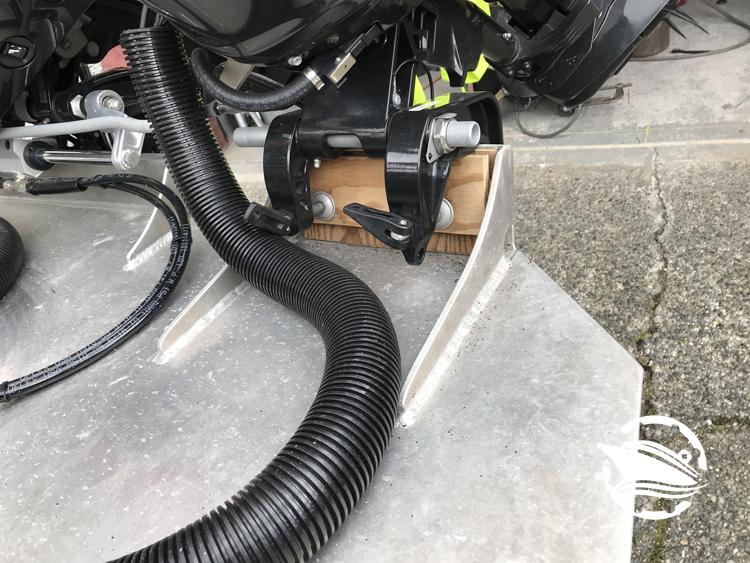
Remember, transom bracket installation is not a ‘do-it-yourself’ job. The procedure involves expert guidance and professional equipment. When the engine aft is shifted, the centre of gravity shifts as well. To compensate for this change, fuel tanks are adjusted accordingly. The resultant impact on the boat’s structural integrity must be accounted as well. Transom brackets are infamous for dry rot which weakens the underlying plywood. And no high-powered outboard motor is safe on a rotting base.
And then there’s the tight sealing issue which threatens the safety of the occupants. All these concerns demand a professional touch that inspires confidence as you propel forward into the seas. You don’t want to be left stranded a hundred miles into the sea!
Are you looking to upgrade your boat’s performance numbers? Cedric Marina offers custom-made outboard brackets that are built exactly to your boat’s standards. Our tailor-made transom brackets can be installed on any boat, whether single twin or triple outboard engines. It’s the simplest, most affordable way to upgrade your boat’s performance numbers.
]]>This has understandably dire consequences leading to financial, time and productivity loss on the part of the welding company. As technical experts in weld-cracking, we have put together a list of pros and cons as well as Dos and Don’ts to note and look out for when welding your metal to prevent such disastrous inconveniences as cracking.
These tricks and maneuvers will help you master weld, anticipate and correct weld-cracking as well as show and improve what you do when your welding activity goes awry. You will also learn ways to prevent occurrences like this. You don’t have to be scared of Weld-cracking and we will prove it.
Hot Cracking
As obvious in its name, hot cracking occurs at extremely high temperatures, usually above 538 degrees Celsius (1000 degrees Fahrenheit). Hot cracking basically occurs in a direction parallel to the length of the weld bead or, in other times, in a directly adjacent direction to it. Hot weld cracking can also manifest in intervals throughout the length of the weld. Hot weld cracking occurs mostly upon hardening of the weld but it is rather impossible to notice immediately.
There are two major types of hot cracking; Centerline hot cracking and crater hot weld cracking. Any pause or abrupt stop welding before the completion of a pass on a weld joint is the main cause of crater cracking as this causes a narrow and wide depression. It is common in areas with tack-welding with great disparity in the tacks.
The centerline hot weld cracking is then subdivided into two; Bead shaped cracking and segregation hot weld cracking. Segregation hot weld cracking is mostly caused by the collection of elements with low melting point (e.g. excessive use of boron during the welding process) in the middle of the weld during hardening. Bead shaped weld cracking, on the other hand, is caused by poor joint design or poor part fit-up.
In an effort to adjust for this, welders make use of a welding process that involves a wide weld bead with a significantly narrow throat that places the centerline under immense pressure and ultimately leads to a crack when the centerline buckles under this pressure. The extent of the concavity of the weld bead also depends, in part, on how high the welding voltage is and what type of electrode or welding wire is used which are determinants that influence the throat thickness and the strength of the finished product.
Thankfully, hot welding can be prevented by using the best techniques during your welding processes as well as making use of the right joint design and perfect parts fit up. The selection of adequate base materials or filler metals is also a good prevention tip to take note of.
Cold Cracking
Cold welding makes the finished product susceptible to some kinds of cracking and cracks from these welds are noticeable only hours or days after the welding process, therefore great care has to be taken in the prevention of this kind of cracking. Cold welding typically occurs at temperatures below 600 Fahrenheit. Often, in cold cracking, the cracking takes place in the filler metals or base materials and are then passed on to the weld so the careful inspection and selection of materials in cold welding is of utmost importance in preventing cold cracking.
As we know by now, pressure or stress residue in the microstructure of the weld is what leads to cracking. In cold cracking, this pressure is mostly caused by Martensite and diffusive hydrogen accumulation.
Cold cracking, also called hydrogen-induced and/or heat-affected zone (HAZ) cracking takes place in the HAZ as stated before as a result of intense pressure residue in the base material as well as the presence of diffusible Hydrogen. The presence of these restrict the final product and are common in materials with high density where they create high tension with strain parts that heat sinks that expedite the cooling process. The shortened cooling rate leads to the formation of a new crystalline microstructure called Martensite in the fine structure of the HAZ.
As a hard microstructure, Martensite has some features that make it rather unsuitable for sending processes e.g. it is coarse and has low ductility and malleability and these allow it to serve as the perfect host to diffusible hydrogen could accumulate to such great amount that causes intense pressure in the HAZ.
The vulnerability of welding materials to cold cracking increases with an increase in the level of carbon or alloy in them. Prevention of cold cracking? That’s easy, employ the backstepping technique, heat the base materials before welding commences or keep the weld at a constant temperature for a whole after welding e.g the induction heating to reduce the rate or cooling.
In your welding process, you should also try to look out for materials with low Hydrogen designator when purchasing materials for welding.
As stated, earlier, you do not have to fear cracking, armed with these defense and preventive measures, you can go about your welding process, exploring new frontiers with absolutely no fear of cracking.
]]>Lightweight and Resistance
With aluminum, ship hulls, as well as other superstructures, can be designed to be light and strong at the same time. Its exceptional resistance levels make an aluminum-made hull better suited to braving the elements as opposed to a polyester one. Therefore, an aluminum ship can be considered to be ideal and safer for sailing.
Durability
With aluminum, there is a guarantee that your ship is going to hold out for longer. The rate at which aluminum deteriorates is remarkably slow. Additionally, it requires less maintenance and has no specific lifetime limit.
High resistance to the effects of corrosion
Aluminum has been a mainstay in the nautical world for decades. This is thanks in no small part to its ability to resist corrosion and the accompanying damaging effects. We do not know of any aluminum-made boats getting scrapped as a result of corrosion. Current knowledge does not allow for the exact determination of the lifespan of an aluminum structure; however, to make things simple, its longevity is defined by experts to be infinite.
However, it is entirely possible that aluminum hulls experience galvanic corrosion. This is usually caused by electrolysis between stainless steel and aluminum parts.
At Alumarine Shipyards, our boats are painstakingly designed to avoid errant contact between stainless components and aluminum ones. Leak testers and insulation transformers are used where needed while cables are protected in pipes and shafts to avoid depreciation.
Comfort
Aluminum provides users with a certain level of comfort. Its durability and resistance remove any sense of panic. Also, it doesn’t make creaky noises at sea.
Customizable
With aluminum as the significant shipbuilding material, it is easier to plan accommodation. Shipbuilders can customize each boat to the owner’s specific requests. They can also modify the inner layout and superstructures easily.
Safety
When at sea, safety is an important factor to be considered. Aluminum is highly rated in the area of safety and security. It doesn’t burn and also doesn’t fuel fires.
Resale value
Since aluminum boats depreciate extremely slowly, their resale values are still quite high. This is helped on by the fact that they are quite sustainable and easily maintained.
Environmental Implications
In comparison with composite material, aluminum can easily be recycled if there is a need. It also generates little to no secondary pollution which is a definite plus for the environment.
]]>